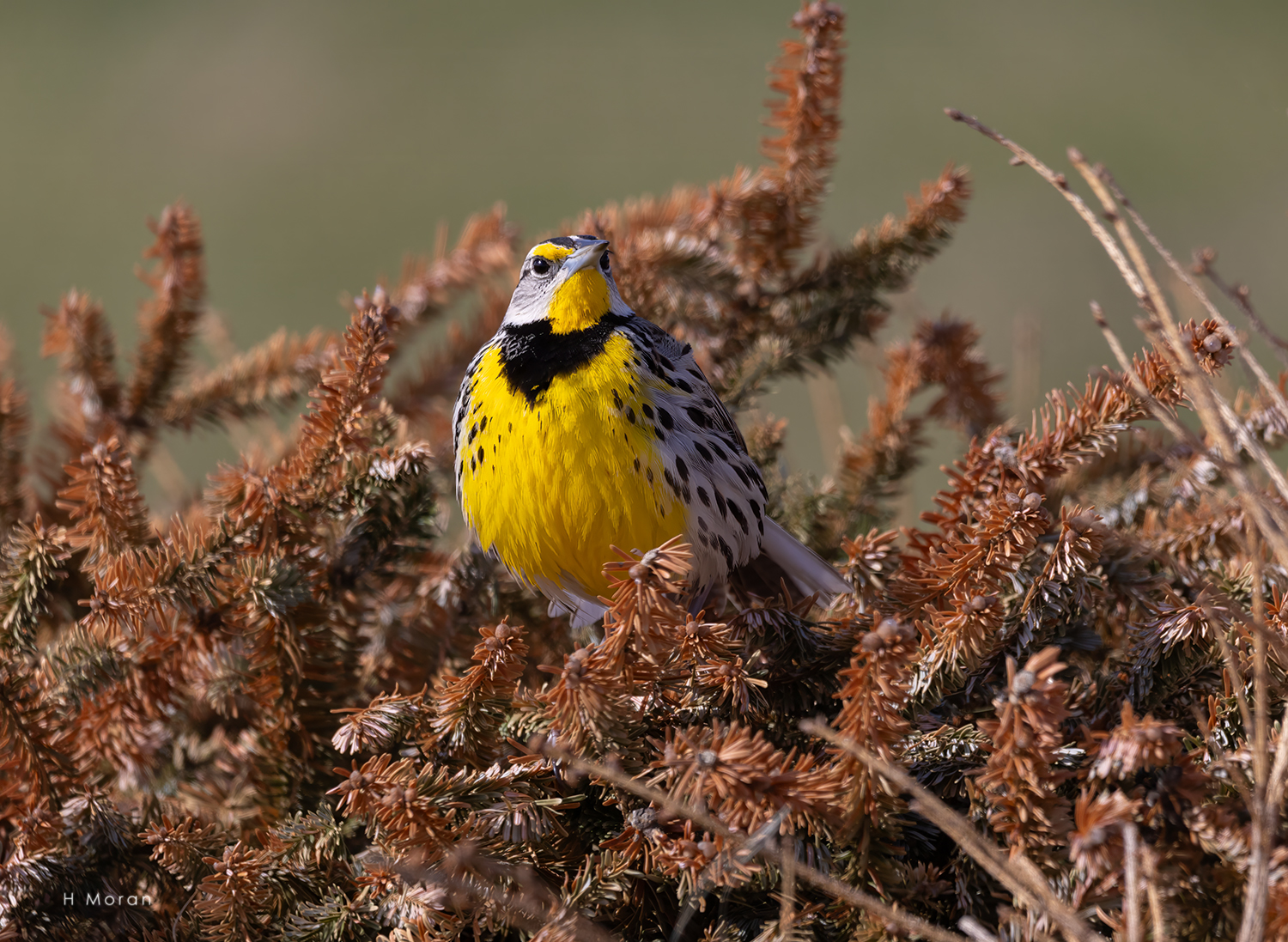
Dickcissels: Fascinating Birds of North America’s Grasslands
It’s always a pleasure to study and capture a series of images of a bird in its habitat in one sitting. Yesterday morning I was able to watch these dickcissels sing, perch, forage, and play among the grasses, chicory, wildflowers, and horseweed. From eye level down in the grass to watching their playful antics perched above in a dead tree, was truly a gift.
Appearance: Male dickcissels have striking black bibs on their throats, yellow breasts, and
brown streaked backs. Females are more subdued in coloration, with less distinct markings
and a paler overall appearance.
Habitat: Dickcissels inhabit a variety of grassland habitats, including prairies, pastures,
meadows, and agricultural fields. They prefer areas with tall grasses and scattered shrubs or
trees for nesting and perching.
Range: Dickcissels breed across much of central North America, from the Great Plains to the
eastern United States and south into Mexico. They winter in South America, primarily in the
grasslands of Argentina and Brazil.
Migration: Dickcissels undertake long-distance migrations between their breeding and
wintering grounds. They migrate in flocks, flying mostly at night to avoid predators and to
take advantage of favorable winds.
Diet: Dickcissels are primarily granivorous, feeding on seeds and grains, especially during the
winter months. They also eat insects, especially during the breeding season when protein is
needed for egg production and chick-rearing.
Foraging Behavior: Dickcissels forage on the ground and in low vegetation, searching for
seeds and insects among grasses and weeds. They may also glean seeds from plants or feed
on the ground in agricultural fields.
Vocalizations: Dickcissels have a distinctive song that sounds like “dick-dick-ciss-ciss-ciss” or
“dick-dick-sizzle-sizzle.” Their vocalizations are used for communication between individuals,
establishing territory, and attracting mates during the breeding season.
Breeding: During the breeding season, male dickcissels establish territories and sing to attract
mates. They build cup-shaped nests made of grasses and other plant materials, typically
placed low in vegetation or on the ground. The female lays a clutch of 3 to 5 eggs, which
she incubates for about two weeks.