My Second Flight
How I got here
Most photographers spend decades refining a single specialty. Landscapes remain landscapes. Portrait artists stay with people. Wildlife photographers often begin early, learning fieldcraft while their knees are young and camera bags seem lighter than they really are.
I chose a different path.
As a landscape photographer with years of exhibitions, published work, and artistic recognition, I made an unlikely decision during the COVID-19 pandemic. While many artists found themselves creatively stalled, I had to reinvent myself. Rather than chasing distant horizons, I turned my lens toward the birds inhabiting my own backyard and the woodlands and fields of Missouri.
At the time I was 63 years old.
For many photographers, that would seem like the wrong time to begin one of the most technically demanding genres of photography. Bird photography requires split-second reflexes, patience measured in hours, expensive long lenses, and the willingness to carry equipment that often weighs twenty pounds or more.
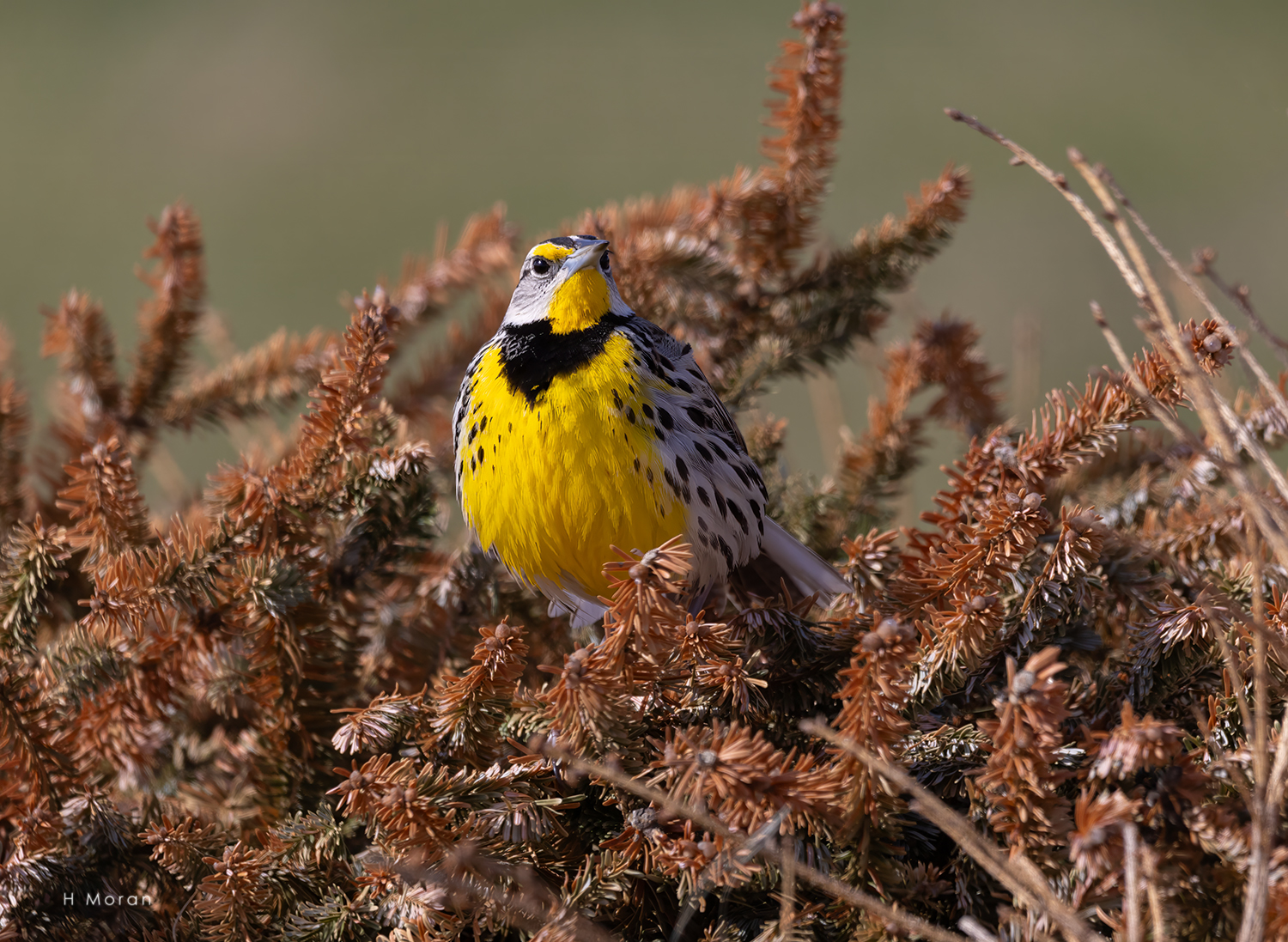
Yet today, I have produced thousands of bird portraits representing well over 150 species. My photographs have appeared in homes, businesses, and institutions throughout North America, Europe, and Asia. My work has been selected for national recognition, including inclusion among the Audubon Top 100 Bird Photos, various magazines, and a selection of national calendars. Along the way, I have earned many awards while continuing to inspire photographers of every skill level.
My story, however, is about much more than photography.
It is a story of perseverance.
Starting Over
Beginning a new photographic discipline is humbling under any circumstance.
Bird photography demands a unique blend of technical knowledge and physical endurance. Autofocus systems must track erratic movement. Exposure changes with every shift in sunlight. Birds rarely pose. Most disappear before the photographer is ready.
Landscape photographers may spend hours composing a single scene. Bird photographers sometimes have less than one second.
My website reflects this evolution. Early years centered on landscapes and visual storytelling. Today, page after page celebrates warblers, hummingbirds, owls, cardinals, goldfinches, flycatchers, woodpeckers, and dozens of other species. The transition was not simply a change in subject matter. It represented a complete reinvention of my artistic life.
The Invisible Challenge
The difficulty of bird photography is magnified by another reality that is often invisible to those around me.
I live with neurodivergent disorders, including Tourette syndrome and other related challenges. Conditions affecting movement, concentration, and physical endurance make even ordinary daily activities more demanding.
Now imagine balancing a heavy camera body fitted with a long telephoto lens while attempting to track a hummingbird moving faster than the eye can comfortably follow.
Imagine trying to wait motionless for an hour only to react within fractions of a second.
Bird photography is physically demanding for anyone. For someone managing neurological differences, every successful image represents another quiet victory.
Yet visitors browsing my galleries may never know the obstacles behind the photographs.
They simply see beauty.
Perhaps that is part of my message.
Rather than allowing limitations to define my work, I have allowed persistence to define it instead.
Conservation Through Appreciation
Long before birds became my primary subject, I considered himself a conservationist.
Photography became another way of encouraging stewardship.
My galleries are not simply collections of attractive bird portraits. They invite viewers to notice details many people overlook – the iridescence on a hummingbird’s throat, the delicate texture of a warbler’s feathers, the intelligence in the eye of an owl, or the playful determination of a goldfinch balancing on a summer flower.
Conservation often begins with appreciation.
People protect what they value.
And people value what they truly see.
By photographing familiar backyard species, I try to reminds us that extraordinary beauty often lives only a few steps outside our back doors.
Recognition Beyond Missouri
My work has quietly reached audiences around the world.
Thousands of my images have been licensed for commercial and private use in countries spanning four continents. My artwork resides in homes, businesses, and institutional collections, demonstrating that authentic storytelling transcends geography. National awards and featured selections have acknowledged not only technical excellence but also artistic vision.
Those familiar with my work recognize that accolades are never the destination.
They are simply milestones along the journey.
The Spiritual Lens
Perhaps the most distinctive aspect of my photography is that it is inseparable from my faith.
My website opens with a simple invitation – not merely to admire creation, but to recognize its Creator.
My hope is for visitors to “see not only the beauty of creation, but also the beauty of the One who created it.”
That perspective shapes every image.
Many photographers pursue perfect light.
I pursue spiritual meaning. To witness Christ in creation.
My galleries are accompanied by reflections, essays, poems, psalms, and personal observations. Scripture frequently appears alongside photographs, not as decoration but as interpretation. Birds become reminders of divine provision. Butterflies become metaphors of transformation. Changing seasons echo hope, lament, renewal, and grace.
My photography is, in many ways, an act of worship.
Rather than separating art and faith, I allow each to deepen the other.
The resulting images invite viewers to pause – not merely to admire a bird – but to consider why beauty exists at all.
If I Can Do It…
There is another lesson woven quietly through my journey.
Many aspiring photographers assume they have missed their opportunity.
They’re too old.
Too inexperienced.
Too busy.
Too limited physically.
Too intimidated by technology.
My story challenges every one of those assumptions.
I had to reinvent my artistic career during a global pandemic.
I entered one of photography’s most demanding specialties at an age when many people are slowing down.
I did so while managing neurological challenges that make the work even harder.
Not because the obstacles disappeared.
Because I refused to let them determine the ending.
I hope my story suggests something encouraging: meaningful creative work does not belong exclusively to the young, the perfectly healthy, or the professionally trained.
It belongs to those willing to begin.
Looking Up
There is a quiet irony in bird photography.
Success requires looking up.
Watching.
Waiting.
Being present.
Those same qualities define much of my life and artistic philosophy.
In a culture racing toward the next distraction, I hope my photographs invite you to slow down long enough to notice the flash of a bluebird, the hover of a hummingbird, or the gentle sway of a goldfinch feeding on summer seeds.
These are ordinary moments.
Until someone teaches us how extraordinary they really are.
I’ve spent the past several years trying to do exactly that.
I hope my photographs remind us that beauty is abundant, perseverance is possible, faith can illuminate art, and new beginnings can arrive at any age.
Perhaps my achievements aren’t the awards or the published images.
Perhaps it is this simple truth:
If I can begin again at sixty-three, with heavy equipment, neurodiverse challenges, and an unwavering faith, then perhaps anyone can.
Sometimes, all it takes is the courage to pick up the camera, step outside, and look up.
If you’d like to reach out, please use the contact form below.
With grace,
Hal